
SOP: Applicant Screening and Tenant Selection
![[HERO] SOP: Applicant Screening and Tenant Selection](https://cdn.marblism.com/rlUA-qGodTI.webp)
Tenant screening is the foundation of successful property management. A thorough vetting process protects property owners from financial loss, reduces turnover, and ensures rental properties maintain their value. This SOP outlines the standardized process Entrusted Property Management uses to evaluate every applicant consistently and fairly.
Step 1: Initial Application Through Zillow
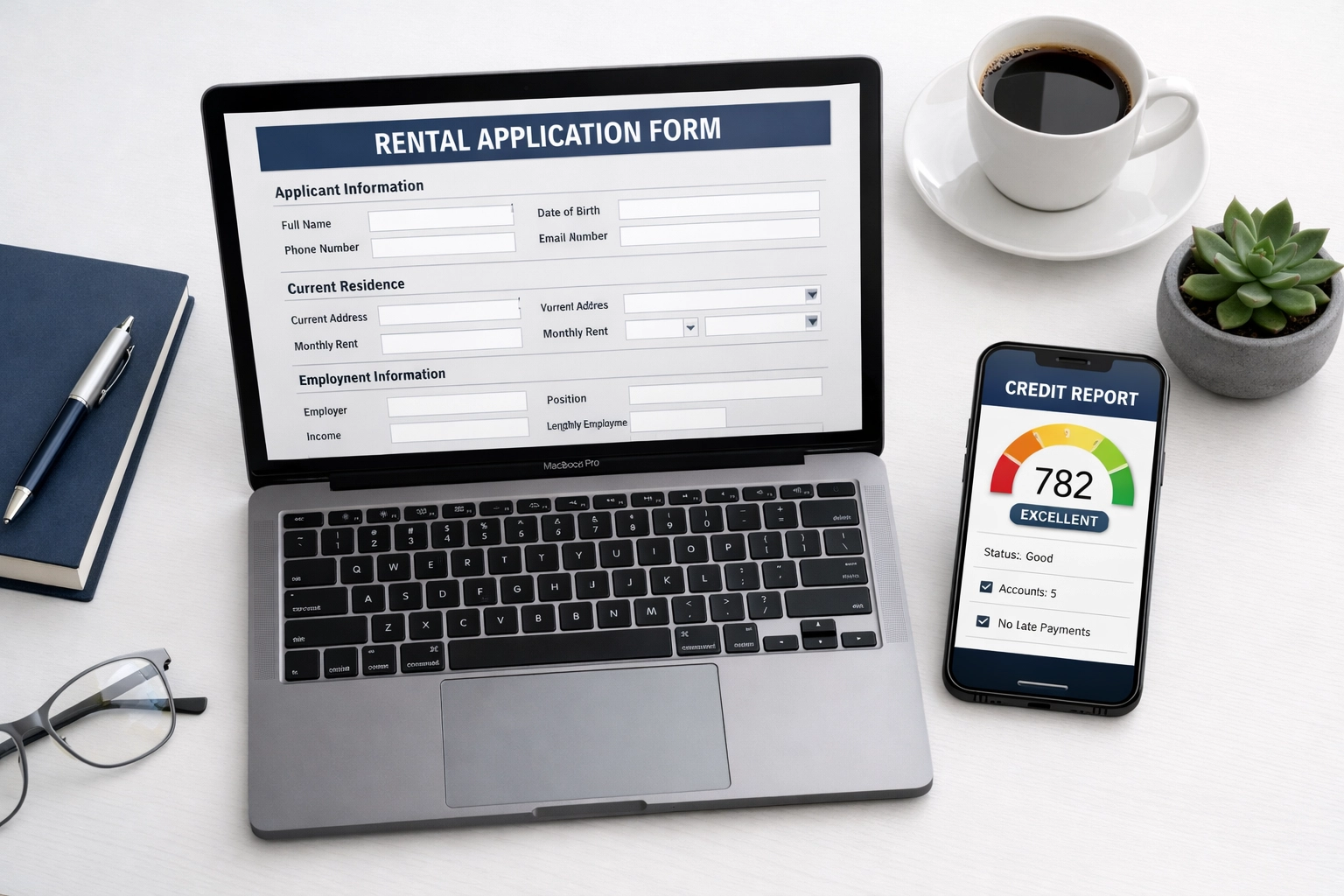
All applicants begin the screening process through the Zillow Rental Manager application system. This platform provides standardized credit reports, background checks, and eviction history in one centralized dashboard.
What Zillow Provides:
- Credit score and full credit report through TransUnion
- Criminal background check (multi-jurisdictional)
- Nationwide eviction history
- Income self-reporting section
- Employment verification section
- Rental history section
Process:
- Direct applicants to submit their application through the property listing on Zillow
- Review the application within one business day of submission
- Check that all required fields are completed
- Flag any red flags immediately: credit score below 600, recent evictions, undisclosed criminal history, or income-to-rent ratio below 3:1
Initial Screening Benchmarks:
- Minimum credit score: 600 (exceptions require owner approval)
- Income requirement: Monthly gross income must be at least 3 times the monthly rent
- No evictions within the past 5 years
- No felony convictions related to property damage, theft, or violent crimes
The Zillow application gives you the data foundation, but it’s only the starting point. Self-reported information must be independently verified through direct outreach.
Step 2: Manual Verification Process
Zillow data is only as accurate as what applicants provide. The manual verification step catches discrepancies, confirms employment stability, and reveals tenant behavior patterns that automated systems miss.
Employer Verification:
Call the applicant’s current employer using the contact information provided in the application. Speak directly with HR or the applicant’s supervisor.
Questions to ask:
- Employment start date
- Current position and job title
- Current salary or hourly wage
- Employment status (full-time, part-time, contract)
- Likelihood of continued employment
Document the name of the person you spoke with, their title, and the date of the call. If the employer will not verify income over the phone, request written verification on company letterhead.
Previous Landlord Verification:
Contact the applicant’s previous landlord, ideally going back two rental periods if possible. Previous landlords provide insight into payment history, property care, and neighbor relations.
Questions to ask:
- Tenancy dates (move-in and move-out)
- Monthly rent amount
- Payment history: Were payments consistently on time?
- Property condition at move-out
- Any lease violations or complaints from neighbors
- Would you rent to this tenant again?
Red flags to document: Late payments, property damage beyond normal wear and tear, noise complaints, unauthorized occupants, or a landlord’s hesitation when asked if they’d rent to the applicant again.
Personal Reference Checks:
Contact at least two personal references provided by the applicant. While these tend to be favorable, they can reveal stability patterns and verify basic information.
Questions to ask:
- How long have you known the applicant?
- In what capacity (friend, colleague, family)?
- Can you speak to their reliability and character?
- Are you aware of any reason they would not be a good tenant?
Document each conversation in the applicant’s file with names, contact information, and date of contact.
Step 3: Income Documentation Requirements
Self-reported income and employer verification calls establish baseline numbers, but hard documentation confirms accuracy and protects both the property owner and the management company.
Required Documents:
For W-2 Employees:
- Most recent two pay stubs showing year-to-date earnings
- Last year’s W-2 or full tax return if employment is recent
- Offer letter if applicant is starting a new job
For Self-Employed Applicants:
- Last two years of tax returns (Form 1040 with Schedule C)
- Recent bank statements (3-6 months) showing consistent deposits
- Profit and loss statement if available
- CPA letter confirming income if business is established
For Contract or Gig Workers:
- Last two years of tax returns (Form 1040 with Schedule C or 1099 forms)
- Bank statements showing deposits from contract work
- Signed contracts showing ongoing work commitments
For Applicants with Multiple Income Sources:
- Documentation for each income stream
- Clear breakdown showing total monthly income meets 3x rent requirement
Alternative Income Sources:
Document and verify: disability payments, Social Security, retirement income, alimony, child support, investment income. Request official statements or award letters as proof.
Income Verification Checklist:
- Calculate gross monthly income from all sources
- Confirm income meets or exceeds 3 times monthly rent
- Check for consistency between pay stubs, tax returns, and employer verification
- Flag any discrepancies for follow-up with the applicant
- Request additional documentation if numbers don’t align

Step 4: Eva Automation, Creating the Tenant Dossier
Once you’ve gathered Zillow data, completed verification calls, and collected income documentation, all of this information lives in scattered places: the Zillow dashboard, your notes, email attachments, and paper files. Presenting this to a property owner in a clear, professional format requires manual compilation.
Eva can streamline this process.
How Eva Creates the Tenant Dossier:
- Data Aggregation: Eva pulls the Zillow credit report, background check, and eviction history into a single document
- Verification Summary: Eva compiles your employer call notes, landlord reference notes, and personal reference feedback into a formatted summary section
- Income Analysis: Eva calculates the income-to-rent ratio, flags any discrepancies between reported and verified income, and lists all documentation received
- Red Flag Report: Eva highlights any concerns, low credit score, gaps in employment, landlord hesitations, or incomplete documentation, in a clear summary at the top of the dossier
- Professional Formatting: Eva generates a clean PDF with sections, headers, and organized data that property owners can review quickly
Eva Workflow:
After you complete all verification steps, prompt Eva with: “Create tenant dossier for [Applicant Name] at [Property Address].” Provide Eva with:
- Link to or export of Zillow application data
- Your notes from employer, landlord, and reference calls
- List of income documents collected
- Any additional observations or concerns
Eva outputs a professional Tenant Dossier PDF that you can send directly to the property owner for final approval. This eliminates manual copy-pasting, reduces errors, and presents your thorough screening work in a format that builds owner confidence.
Recommended Dossier Sections:
- Executive Summary (approve/deny recommendation with reasoning)
- Applicant Overview (name, current address, requested property)
- Credit and Background Summary (score, history highlights, criminal background)
- Employment and Income Verification (employer details, income breakdown, ratio calculation)
- Rental History (previous landlord feedback, tenancy dates)
- Reference Check Summary (personal references, key insights)
- Documentation Checklist (all items received)
- Red Flags and Concerns (if any)
- Recommendation (approve, conditional approve, or deny with reasoning)
Step 5: Owner Approval Process
Once the Tenant Dossier is complete, send it to the property owner for final approval. Entrusted Property Management provides the professional recommendation, but the owner makes the final decision.
Approval Timeline:
- Send dossier within 24 hours of completing all verification steps
- Request owner response within 48 hours to keep the applicant engaged
- If owner does not respond within 48 hours, send a follow-up reminder
Communication to Owner:
Include a brief email summary with the dossier attachment:
“Attached is the complete tenant screening dossier for [Applicant Name] applying for [Property Address]. Key highlights: [credit score], [income ratio], [rental history summary]. Based on our screening, we recommend [approve/conditional approve/deny]. Please review and confirm your decision within 48 hours.”
If the Owner Approves:
Notify the applicant immediately and begin the lease signing process.
If the Owner Denies:
Send the applicant a formal adverse action notice citing the specific reasons for denial as required by the Fair Credit Reporting Act (FCRA). Include information about the credit reporting agency used and the applicant’s right to dispute inaccurate information.
Key Compliance Notes
Fair Housing Laws:
Apply the same screening criteria to every applicant. Do not make exceptions based on race, color, religion, national origin, sex, disability, or familial status. Document your screening criteria and apply them consistently.
FCRA Requirements:
If you deny an applicant based on information in a credit report or background check, you must provide an adverse action notice. This notice must include the name of the credit reporting agency, the applicant’s right to obtain a free copy of the report, and the right to dispute inaccurate information.
Documentation Retention:
Keep all screening documentation for a minimum of 3 years. This includes applications, credit reports, verification notes, and correspondence with applicants and owners.
Screening Consistency:
Use the same process, benchmarks, and verification steps for every applicant. Document any deviations and the reasoning behind them.